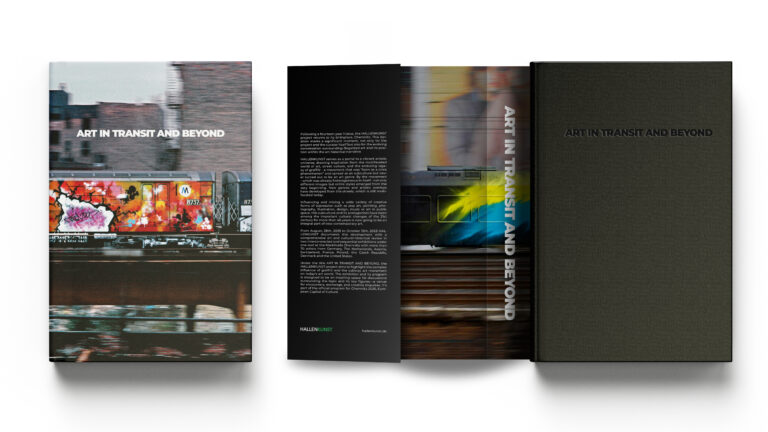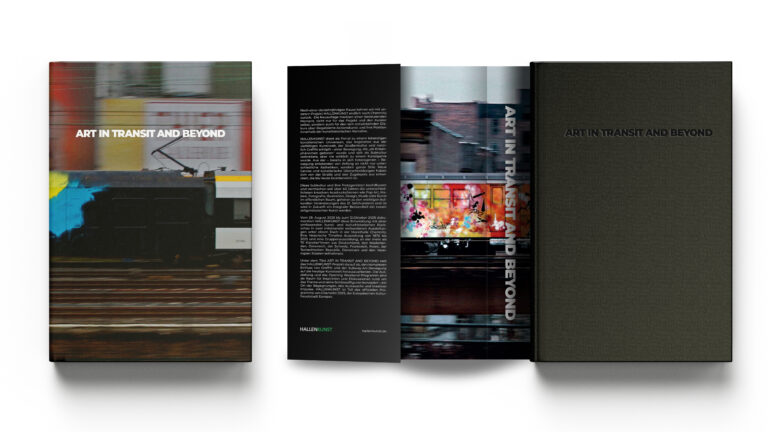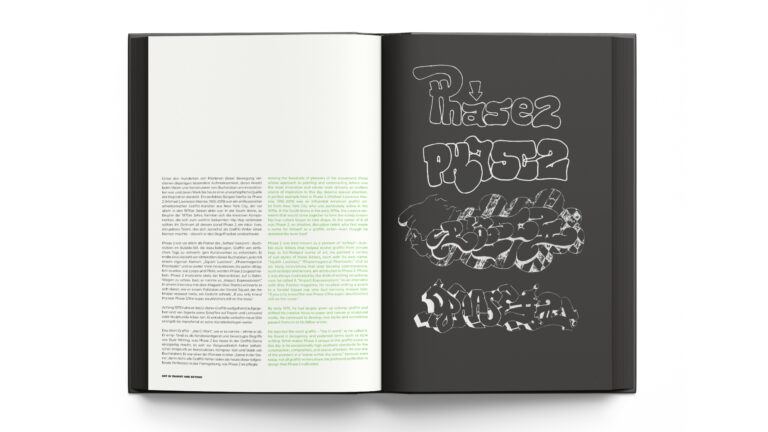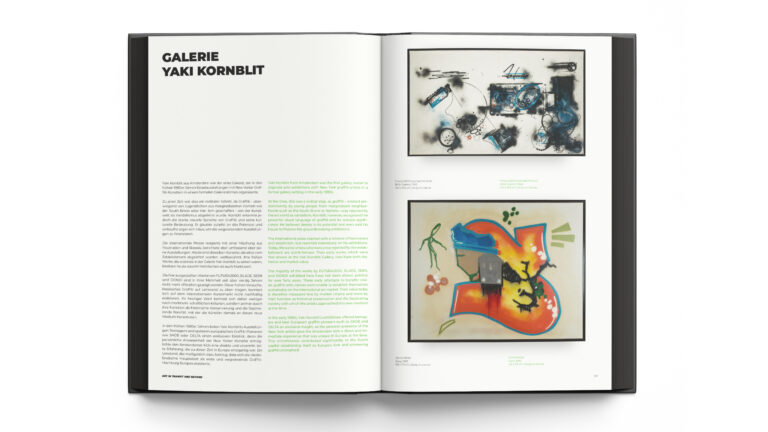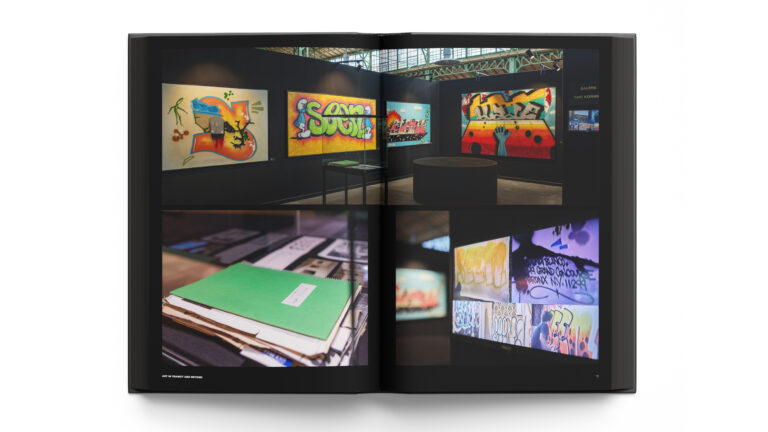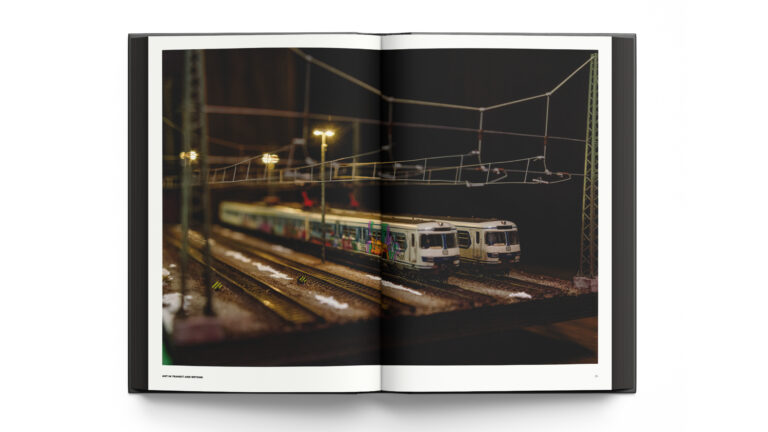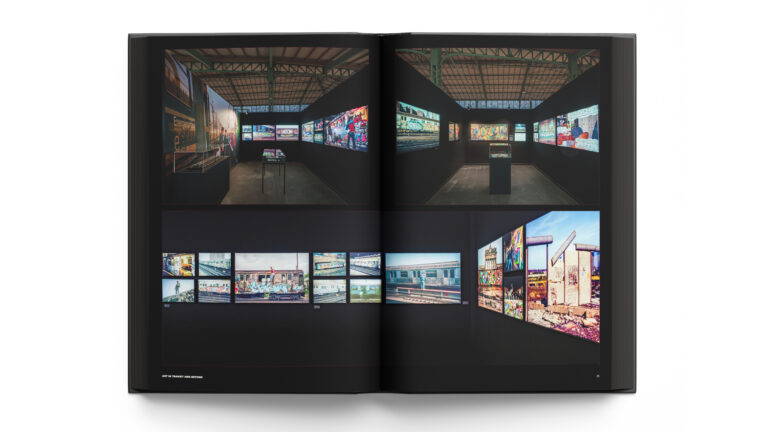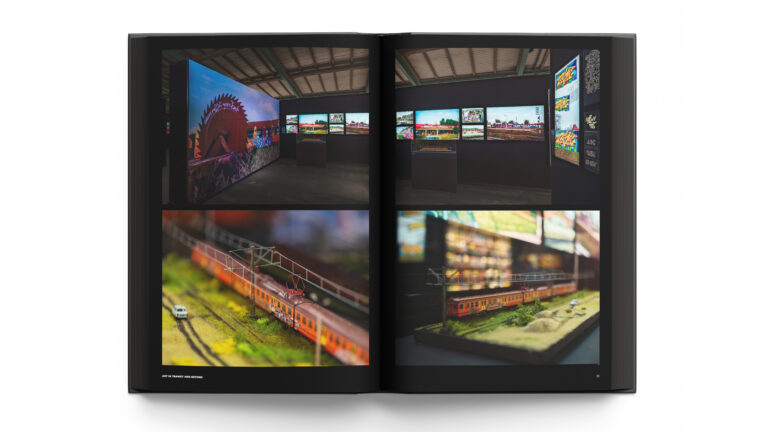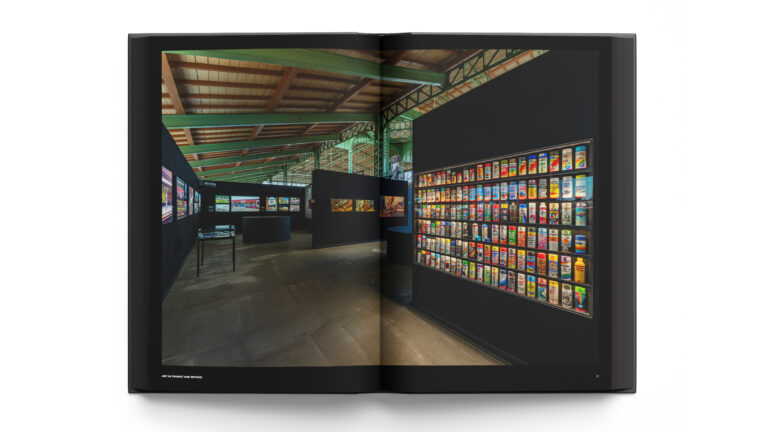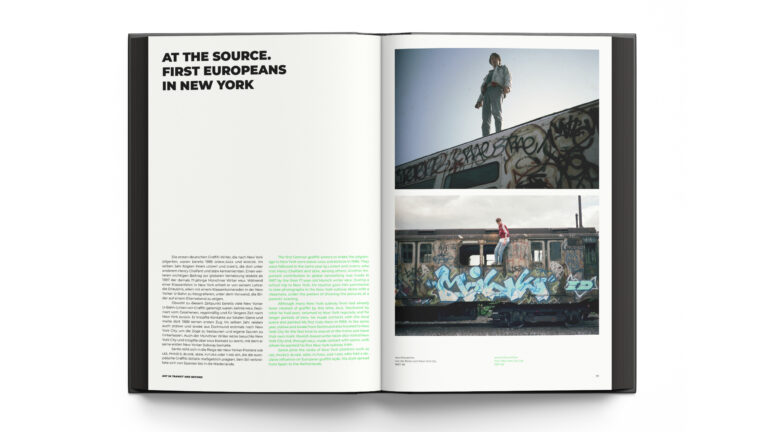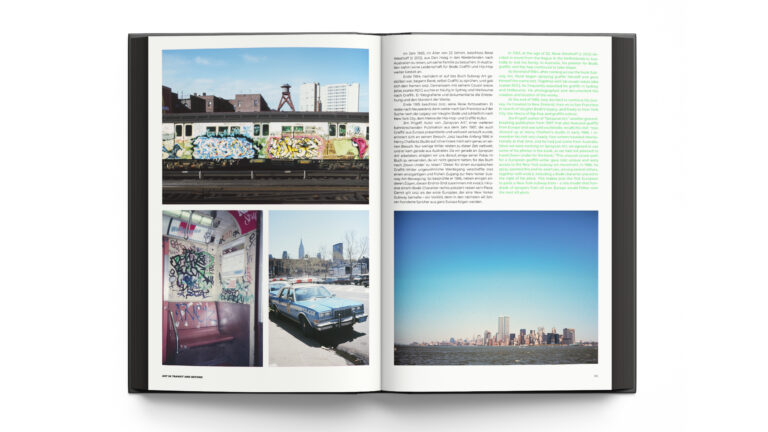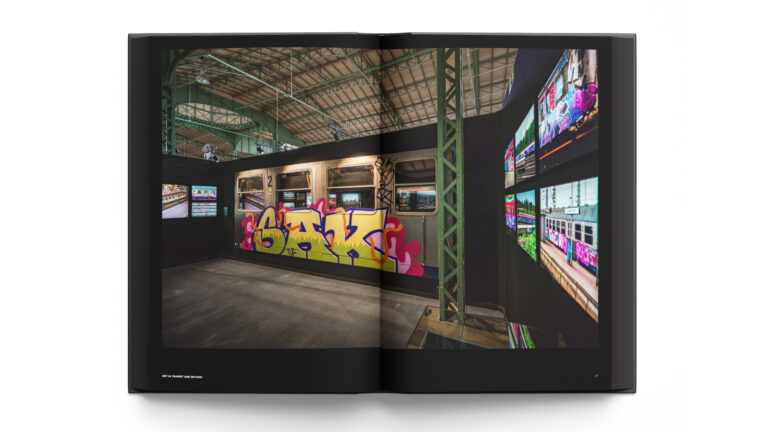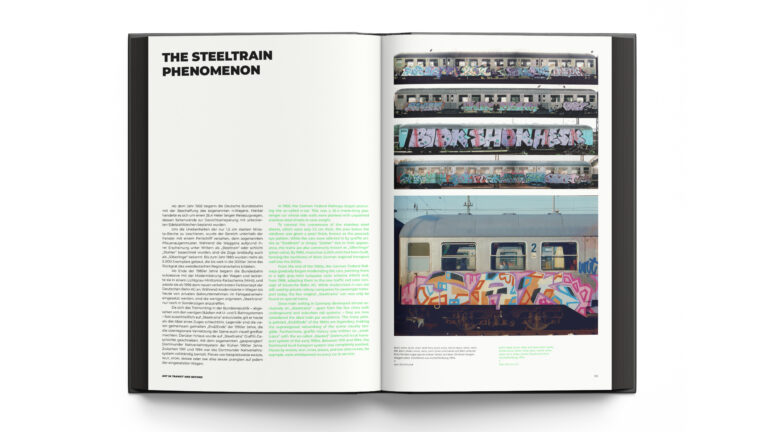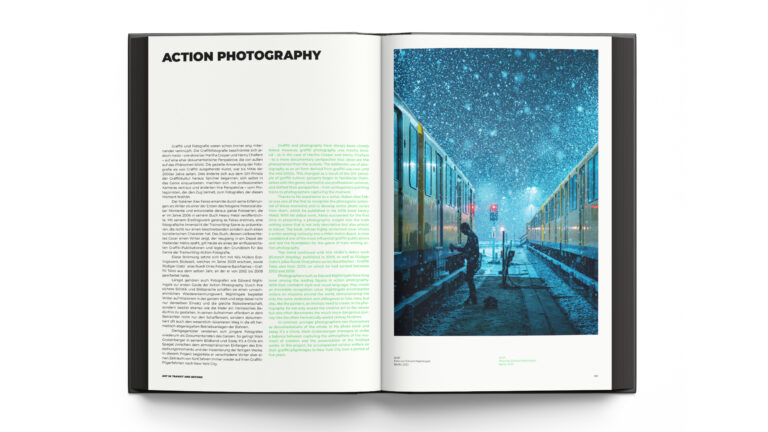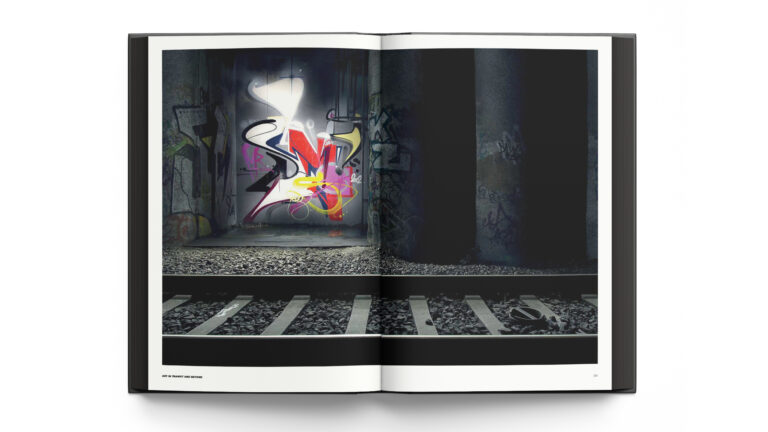
The catalogue of the 2025 HALLENKUNST double exhibition now brings the whole story together in an almost 500-page publication that has become far more than a traditional exhibition catalogue. It also serves as a compelling contribution to cultural and art-historical documentation. Particularly fascinating are the chapter on Yaki Kornblit, the numerous replicas (such as the Steel Train), and the meticulously recreated model trains presented within the historical context of the Geltendorf Train (1985) and Graffiti Goes East (1996/1997) with the CAF Crew Berlin.
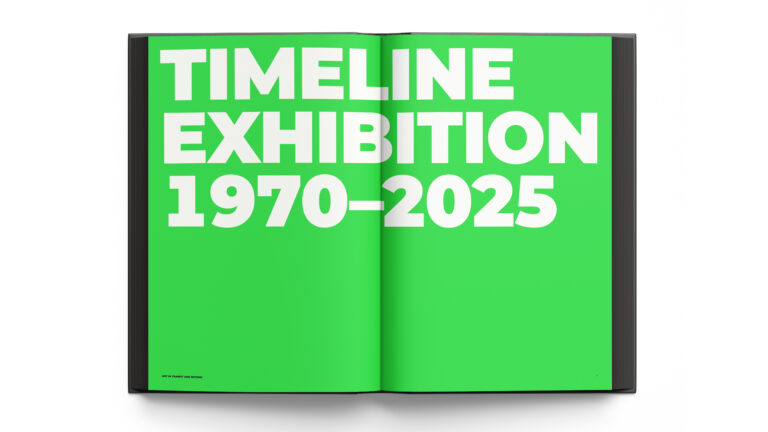
The 500-page catalogue opens with an introductory chronological section, the HALLENKUNST Timeline, mirroring the original exhibition’s structure. This part of the book takes you on a journey back to the early 1970s, a time when the first teenagers in New York City, driven by a variety of social and cultural motivations, began tagging the walls and subway trains of the Big Apple with their initials and names. This quickly evolved into an unstoppable movement.
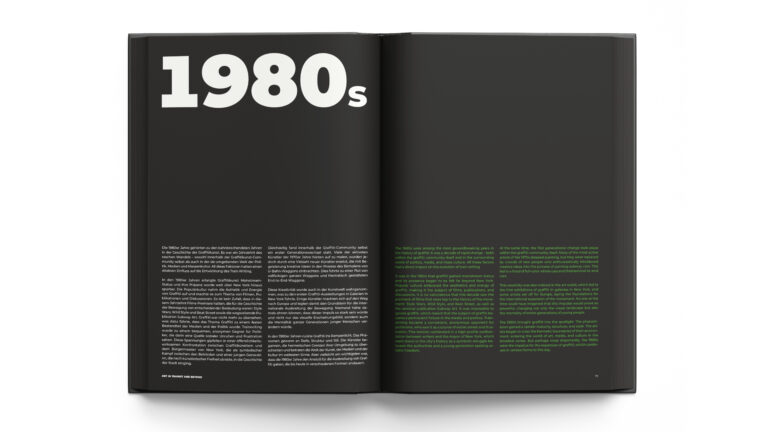
The publication traces a period and aesthetic development that would profoundly influence subsequent generations of artists. In the 1980s and 1990s, the spark spread to England, France, Germany, and the Netherlands, unleashing creativity and energy in thousands of young people. On an aesthetic level, the timeline shows how graffiti—especially on trains—has developed and, in part, reinvented itself over the past 55 years.
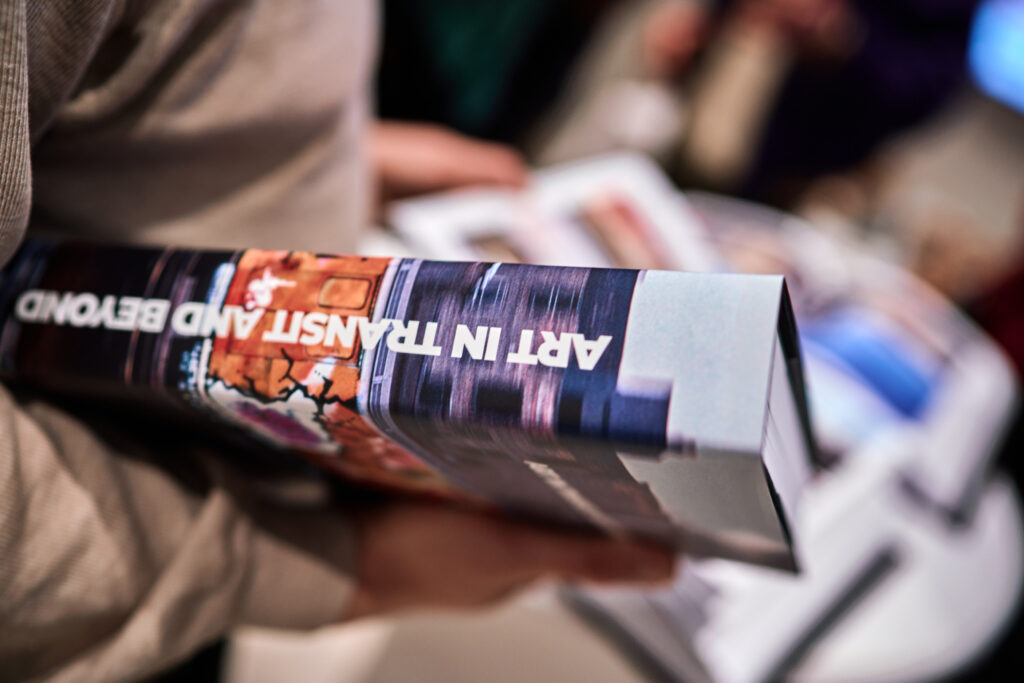
The book is compiled by its curators, artists, photographers, partners, and projects that played an important role in the storytelling of the exhibition. The Timeline section culminates in 2025, highlighting the growing influence of the digital world, before transitioning into the main HALLENKUNST Group Exhibition, which shows what has become of the protagonists of this massive movement.
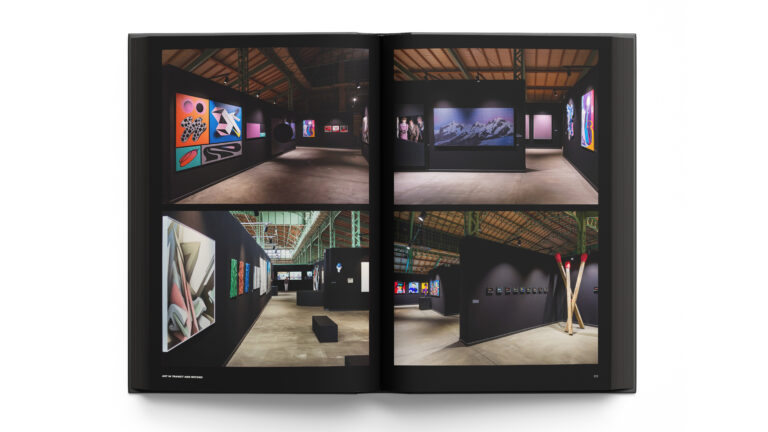
Following the original exhibition’s structure, the nearly 500-page catalogue moves from the Timeline into the main exhibition section. Influencing a wide variety of creative fields such as pop art, painting, photography, and design, the graffiti movement and its protagonists have been among the most significant cultural transformations of the late 20th and early 21st centuries and have become an integral part of contemporary art.
In this section of the publication, traditional graffiti rarely appears. Instead, readers encounter artistic positions that have evolved from the subculture into other genres. The documented works—ranging from painting and media art to sculpture—engage with cultural contexts originating in public space. They also interact with Chemnitz as the European Capital of Culture 2025, the host city of HALLENKUNST.
Just over half of the featured works were created during an Artists-in-Residence program at the CAMMANN Studios Chemnitz, while the remaining works were produced either in public space or in the artists’ own studios. Some pieces explicitly bridge the cultural-historical background of the Timeline and contemporary art. In others, the early influences are almost indistinguishable, allowing them to blend seamlessly into their respective genres. This reflects the essential curatorial idea: ART IN TRANSIT & BEYOND.
Over the past 55 years, graffiti has seen several unsuccessful attempts at “musealization.” Only when artists understand that their time in the street can generate valuable impulses—impulses that must then be translated into artistic consciousness—do exciting new perspectives emerge. HALLENKUNST and this book document this development through a comprehensive artistic and cultural-historical overview featuring more than 70 artists and collectives from Germany, the Netherlands, Austria, England, Switzerland, France, Poland, the Czech Republic, Denmark, and the United States.”
The book is published in both German and English, with the exhibition texts and photographs expanded and further developed for the catalogue. Buyers can also choose between two different covers: Break Train by FUTURA2000 and Splash by MOSESTAPS. Get it now one our shop here!